His struggle to make ends meet exemplifies the plight of Greeks mired in a fifth year of recession. Yesterday the official unemployment rate rose to a record 22.6 per cent in the first quarter. But the hungry civil servant's attitude towards the general election on Sunday also typifies the polarized nature of the national debate.
The race has boiled down to choice between a coalition led by either New Democracy, the conservative establishment party, or Syriza, an insurgent Leftist coalition.
Vangelis will support the latter, as he did in a May 6 vote, when Syriza stunned the whole of Europe by coming second and then confounded attempts to form a national unity government, so requiring Sunday's fresh election. New Democracy, however, led narrowly in the last public opinion polls before they closed on June 2 under Greek law. Private polling since has shown a similar trend.
The stakes could hardly be higher. The vote has been presented as a de facto referendum on Greece's membership of the euro because of the pledge by Alexis Tsipras, Syriza's 37-year-old leader, to revise the second memorandum of understanding between and international institutions and lenders, which contained the toughest austerity measures and brought riots to the capital's streets.
His demands include a three to five year moratorium on Greece's interest payments, a rapid recapitalisation of the country's banking system and a restoration of unemployment benefit and the minimum wage to pre-crisis levels - reforms that were required by the memorandum.
Though Mr Tsipras has given himself some wriggle room, by not committing to a unilateral cancellation of the agreement, his critics claim that his demands would be so inflammatory that Berlin and Brussels would soon give up on the Greeks. The next tranche of Greece's bailout funding would then be withheld, so hastening its exit from the euro.
Officially, Mr Tsipras is committed to staying in the currency, though the same cannot be said for all the members of his coalition. But his gamble is that German leaders are bluffing when they say that a Greek exit from the euro would be manageable.
Like many Greeks, he reckons that although his country is small enough to represent just two per cent of the eurozone's output, it is big enough to be the first domino that starts the collapse of the single currency.
He is hoping that supposed disillusion in Europe with austerity will work in his favour and loosen the creditors' grip on the Greek economy.
"Tsipras is trying to convince people that we can stay in the euro with him in charge," said Spiros Rizopoulos, head of Spin Communications, a consultancy in Athens. "But if he thinks Angela Merkel is going to back down – well, he can say that, but I can say I am Brad Pitt, but am I am not Brad Pitt."
Greek bank shares rose 19pc yesterday, bucking European trends on market talk that broadly pro-bailout parties are likely to prevail on Sunday.
But few people will vote with enthusiasm for New Democracy. Its 61-year-old leader Antonis Samaras is seen by many Greeks as part of the corrupt old guard responsible for what Wolfgang Schaeuble, the German finance minister, this week called "decades of economic mismanagement".
Though Mr Samaras says he wants to renegotiate the memorandum, his demands would be minor compared to those of his rival Mr Tsipras.
Neither however has presented a convincing vision for rebuilding Greece's sclerotic bureaucracy and lack of competitiveness.
Forex focus: European unity may lie ahead – but for how many? - Daily Telegraph
As HiFX’s Chris Towner says: “Germany is being forced into a corner where it is they who will need to start to give up if they would like Europe to become more unified. The Spanish finance minister is right to say that the battle for the euro will be waged in Spain, but it will be decided in Germany.”
Eurosceptics suspect Germany will use the crisis to usher in a United States of Europe.
“Is there a hidden German agenda? Probably not,” answers Charles Purdy of Smart Currency Exchange. “They have always thought and made clear that greater fiscal unity is a must for the euro – ensuring that each country adopts their fiscal discipline. Up to now the political will has been lacking but if the euro is to survive and the 'weaker’ countries are to benefit from Germany’s strong credit rating then fiscal union will be what Germany expects.”
World First’s chief economist Jeremy Cook believes greater unification will take decades, saying: “Fiscal union is the endgame for the eurozone – a United States of Europe that has centralised fiscal and monetary policy and leadership based from one location. This will take years to set up and will only follow a huge upheaval of the European political landscape.”
However, while the consensus view is that the eurozone will bind closer together, this doesn’t mean that all 17 members will remain in the club.
“It is becoming increasingly clear that some nations can’t remain in the eurozone,” says Richard Driver of Caxton FX. “A stronger eurozone with a fiscal union is the only way the eurozone can survive but this won’t come soon enough for Greece.”
Stephen Hughes of Currencies.co.uk is sceptical, saying, “As a growing number of voices call for greater fiscal union across the eurozone, it’s still by no means a given that this is an achievable path – don’t forget that even the German people have yet to ratify the fiscal compact.
“But, given the depth of the current euro crisis, we are likely to see a more accommodating stance from policymakers in the coming months. What is clear is that any move to greater unity will take time to implement, something Greece certainly doesn’t have. As for Spain, Portugal and Ireland, the jury’s out for them...”
Can You Make Money by Buying From Facebook's IPO? - huffingtonpost.co.uk
The answer is simple. Only if they can turn their organically grown database into a revenue stream channel the $100 billion valuation makes sense and one can make money out of it. If you think this is a good answer, think again?
This answer fails to understand the influential power social connections can have long-term. By thinking you can't make money since users aren't clicking on ads you are missing the whole point. In the online world we are all used to measuring everything from click through rates to sales in real time, however with social sites like Facebook one must have a holistic approach in order to reap the benefits which lie underneath the surface. It's a bit like saying we shouldn't invest in customer service because it doesn't produce returns; while you may not be able to track the return on investment on your customer service initiatives like you can with your marketing campaigns, that's not to say that investing in customer service won't yield positive returns.
A new report by internet marketing research company Comscore suggests that social media marketing can show a positive return on investment by directly influencing sales, but it has to be measured in a different way to conventional online marketing since it's not ads that are driving sales, building brands and creating customer loyalty. It's the very act of being social and engaging with your customers. That means understanding the link between Facebook's various ad units with what Comscore calls free earned media, which is essentially the posts and other actions by brand and consumers on the social network.
The Comscore report cited examples of how advertising on Facebook could be traced to sales increases. For example, by tracking consumers who were Starbucks fans on Facebook against a control group of shoppers who weren't exposed to those messages, Comscore found that over a four-week period, 2.12% of the brand's fans and their friends made a purchase at the coffee shop. That's 0.58 percentage points higher than the 1.54% for the control group. That suggests that fans and their friends made 37.7% more purchases than those not exposed to the brand's earned media.
So all in all, can we buy Facebook shares at the current price and still make money. While the answer seems positive, you may want to wait as the current scepticism around Facebook's potential to deliver a return on investment may result in share prices dropping short-term, only to start seeing an upward movement medium to long term but we will most probably have to wait several years to witness this change. I guess the question is, if social media advertising is still in its infancy, where is the social media stock market? You can't expect for investors to understand now what most marketers still don't.
Social media will create a revolution in how we behave ourselves and eventually will start the next bull market, but not for at least three to five years. Social media gives the ability for everybody to be in instant communication with everyone else, and that's very powerful. We must not forget that Facebook is the pioneer of the social media generation, and remains as the most powerful social media network in the planet.
Follow Vashi Dominguez on Twitter: www.twitter.com/VashiDominguez
MPs attack Money Advice Service over lack of direction - Citywire.co.uk
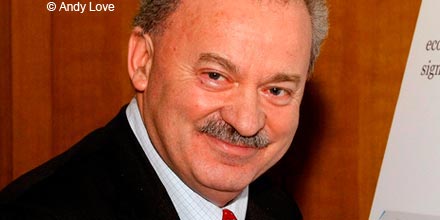
MPs have attacked the Money Advice Service (MAS), arguing it has a lack of direction and is replicating services that were already available.
During a Treasury Select Committee evidence session as part of an inquiry into the MAS, Labour MP Andy Love (pictured) said that the service was brought in to help consumers manage debt advice and it seemed instead to be replicating other services already provided.
‘I would understand as a coordinator in that sense at least a minimum bringing together some of these services and having them understand to interact with each other,' he said.
'Do they recognise that this is a complex landscape? And that MAS has been asked to coordinate?’
Labour MP George Mudie attacked the service’s lack of direction and said: ‘Does anyone at the table know what their role is?
‘They have not just arrived, they came from the body that was under the Financial Services Authority—I didn’t hear screams then— this body has been set up with this money and it seems to be they’re scrambling around to find a role at a very sensitive time.’
On the panel was chair of the Financial Services Practitioner Panel, Joe Garner, who said it was ‘absolutely appropriate’ for the financial services sector to be funding the MAS but that it should be pulling its weight.
‘I don’t think there’s an issue over the price tag, I think it’s over the value for money. If it were a business it would be more closely co-ordinated.
‘There’s a big savings gap and pensions gap in this country and between us we can’t do enough in this area and the industry thinks [the MAS] should be at least contributing its fair share.’
Adam Phillips, chair of the Financial Services Consumer Panel agreed, arguing the MAS needed to do more than simply sign-posting or replicating other websites.
FOREX-Dollar falls vs yen and euro after US jobless claims data - Reuters UK
Thomson Reuters is the world's largest international multimedia news agency, providing investing news, world news, business news, technology news, headline news, small business news, news alerts, personal finance, stock market, and mutual funds information available on Reuters.com, video, mobile, and interactive television platforms. Thomson Reuters journalists are subject to an Editorial Handbook which requires fair presentation and disclosure of relevant interests.
NYSE and AMEX quotes delayed by at least 20 minutes. Nasdaq delayed by at least 15 minutes. For a complete list of exchanges and delays, please click here.
FOREX-Euro gains third day vs dollar but gains seen tenuous - Reuters
Thomson Reuters is the world's largest international multimedia news agency, providing investing news, world news, business news, technology news, headline news, small business news, news alerts, personal finance, stock market, and mutual funds information available on Reuters.com, video, mobile, and interactive television platforms. Thomson Reuters journalists are subject to an Editorial Handbook which requires fair presentation and disclosure of relevant interests.
NYSE and AMEX quotes delayed by at least 20 minutes. Nasdaq delayed by at least 15 minutes. For a complete list of exchanges and delays, please click here.
Forex: USD/JPY hovers above 79.20 - FXStreet.com
Debt crisis: 'possibility for further Moody's action on Spain' - Daily Telegraph
Professor Pablo Triana, from Spain's ESADE Business School, warned that this may not be the end to Moody's action on Spain.
No finance limit forces Obama into fame game - Sydney Morning Herald

Illustration: Simon Letch
This morning, Australian time, the US President, Barack Obama, is due to attend a fund-raising dinner party at the New York home of movie stars Sarah Jessica Parker and Matthew Broderick. Co-hosted by the editor-in-chief of Vogue, Anna Wintour, the price of a ticket was a reported $80,000 a head. Not a good look for the President in the week the US Federal Reserve reported that average American wealth had plummeted to $77,300 in 2010 - down from $126,400 in 2007.
As the US economy is underperforming, unemployment is officially 8.2 per cent and confidence is, at best, wavering, this would not seem to be the time to be hanging out with high-wattage wealthy celebrities. But the President needs the money.
Obama and the now certain-to-be-anointed Republican candidate, Mitt Romney, have opted to not accept public financing for the 2012 presidential election campaign. Previously, candidates would raise money to boost their electoral fortunes before the party conventions, but after that would accept the benefits - and constraints - of public funding.
Now, after a Supreme Court decision that effectively deregulated campaign financing (undoing all those decades of hard work to reform what had arguably been a pretty corrupt system), the bar has been raised significantly.
More money is going to be needed. And there are now virtually no limits on how it is raised or spent.
This presidential election is, according to Obama's senior campaign strategist, David Axelrod, going ''to test the limits of what money can do in politics, because there's gonna be so much of it concentrated in so few states'', as he told New York magazine's John Heilemann earlier this month.
And Obama is now falling behind in the fund-raising stakes. Although at the end of March, when he had raised about US$197 million, he was way ahead of the then-frontrunner Republican contender Romney, who had just $87.5 million, the other Republicans have since coalesced behind Romney - and so have their donors.
Just this week, billionaire Nevada casino owner Sheldon Adelson, who had been backing Newt Gingrich, kicked in $10 million to Romney's Restore Our Future super-PAC (political action committee) and Forbes magazine reports he may well follow that with the $100 million he had promised Gingrich.
Last month, Romney raised $76.8 million to Obama's $60 million, and he is pulling ahead with the very wealthy.
Wall Street has spurned Obama, so far giving Romney $37.1 million and Obama only $4.8 million. Ominously, these sums include donations from 19 people who gave to Obama in 2008 but not this time. Forbes says 32 billionaires, or 8 per cent of their 400 rich list, have donated to Romney and more will follow.
So while Obama continues to pursue the grassroots online fund-raising that was so successful in 2008, for the really big bucks he is being forced to take his begging bowl to three different and potentially risky sources of funds: Hollywood, Silicon Valley and rich gays. No one in the know doubts that the President's decision to support gay marriage was made with an eye to the pink dollar. A few days after the decision, a Hollywood fund-raiser hosted by George Clooney and including high profile gay supporters, raised $15 million.
This strategy is risky because it requires Obama to be hanging out with the mega-rich at a time when his political message is directed to economically distressed Americans, who are striving to return to being middle class. It could easily backfire on him.
The now pretty much united Republicans are trying to portray Obama as more focused on fund-raising than on governing. Given he has done 160 events so far (compared with George Bush's 74 at this time in the 2004 race), including six in just six hours in Maryland last Tuesday, this will not be a hard case to make.
A few weeks ago it was unimaginable that America's first black president may be in danger of not winning a second term but that prospect is now causing apprehension and even panic among Democrats.
The failed recall of the Republican governor Scott Walker in the highly unionised and overwhelmingly Democratic state of Wisconsin is being seen as a huge wake-up call that the party cannot assume that it will win in the presidential election in November.
Consolidated polling is showing just a two-point difference between Obama and Romney. Even among the three key demographics Obama felt confident of holding - women, young people and Latinos - the numbers are starting to close.
If Romney chooses Latino Florida senator Marco Rubio as his running mate, as a straw poll among party conservatives advocated this week, they could be a formidable team able to make significant inroads into the much-needed Latino vote in states such as Florida and Arizona.
Obama shows no signs of improving his ticket would he ditch the Vice-President, Joe Biden, although refreshing his team would seem to be a no-brainer in a tight electoral race. If this is not the time to place the extremely popular Hillary Clinton on the ticket, when is?
Obama's team foolishly set the bar high by leaking their expectation that their guy would be the first in presidential election history to raise $US1 billion and that Priorities USA Action, his super-PAC, would rake in another $100 million. Instead, Obama is struggling to reach the revised target of $750 million and his PAC, according to New York magazine, has just an embarrassing $10 million.
So we will be seeing a lot more of Obama with movie stars and the super-rich in coming months. The only question is whether the money raised will be at the expense of his political credibility - and his electoral prospects.
Twitter: @SummersAnne

No comments:
Post a Comment