
The German deputy finance minister Steffen Kampeter has ruled out eurobonds, saying "debt is a national responsibility"
Germany's deputy finance minister has ruled out "eurobond-lite" plans to pool part of eurozone countries' debt.
Speaking exclusively to the BBC, Secretary of State Steffen Kampeter said "debt is a national responsibility".
"I don't see any strategies where we socialise and redistribute the bad political decisions made by some who are over-indebted."
The German government has already ruled out full "eurobonds" for now.
That may disappoint investors on international markets whose hopes had been raised by reports that the Germany might be inching toward the compromise mutualisation plan.
The plan, from Germany's so-called "wise men" group of private economic experts, would let countries with debt above 60% of GDP such as Greece issue eurobonds for debt above that level, which would then be paid down over a maximum of 25 years.
In effect, indebted governments struggling to borrow at affordable rates in the commercial markets would be able to take advantage of lower borrowing costs offered to countries within this joint bond, such as Germany.
It was put forward as an alternative to full eurobonds, which would involve eurozone economies clubbing together to issue bonds representing all 17 member nations.
Merkel warningEarlier, Chancellor Angela Merkel said world leaders should not "overestimate" Germany's ability to resolve the eurozone debt crisis.
She told Germany's parliament that the country's options for rescuing the eurozone were "not unlimited".
Mrs Merkel called for more regulatory powers for the European Central Bank, and repeated that growth should not be financed by more debt.
Her speech came ahead of a meeting of G20 nations in Mexico this weekend.
Germany has been central in driving changes within the eurozone and backing the financial support given to debt-laden nations.
But, referring to the G20 meeting, she said: "I say to them Germany is strong, Germany is an engine of economic growth and a stability anchor in Europe... but Germany's powers are not unlimited."
She expected the debt crisis to be the main issue at the summit. "Our country will be the centre of attention. It's a fact, all eyes are on Germany because we are the biggest European economy and a major exporter," Mrs Merkel said.
But Europe would only find a way out of the crisis with a strong "political union" that mandated greater fiscal co-ordination and oversight to put member countries on a "solid foundation", she said.
Mrs Merkel has resisted calls that austerity measures in the eurozone should be relaxed in the hope that it would boost growth. "We must all resist the temptation to finance growth again through new debt," she said.
She also called for the European Central Bank to play a "bigger role" in overseeing banks to avert further turmoil in the industry.
'Misguided'"We need a more independent supervisory authority," she said in an apparent criticism of the European Banking Authority.
Berlin has said the current system is too dependent on national regulators and, in particular, under-estimated Spain's banking problems.
"The EBA conducted stress tests on all European banks a year ago, and the national oversight bodies were very involved," Mrs Merkel said.
"We are now seeing the result. Spanish banks are in quite a different situation than the tests appeared to show."
She said that national banking authorities, on which the EBA relied for its information, had provided results that were as positive as possible "out of misguided national pride".
Mrs Merkel has long argued against what she called "miracle solutions" to the debt crisis, saying that only closer political and fiscal union can solve the problems - something she accepted was a "Herculean task".
Worries in the financial markets that there is still no clear roadmap towards a solution for the eurozone were underlined on Thursday when Spain's borrowing costs hit at a new euro-era high, just days after the country agreed a bailout of its bank sector.
Italy's borrowing costs also jumped sharply amid fears that the country's debt woes were deepening.
Meanwhile, the Prime Minister of Slovakia has said that Greece should quit the euro bloc if it fails to honour its commitments.
Robert Fico said Europe should do all it could to keep Greece within the bloc, but that the country had to adhere to the terms of its bailout package.
With anti-austerity political parties expected to do well in Greece's general election on Sunday, Mr Fico told a news conference: "If the Greeks do not meet the commitments they have made, do not meet their financial commitments, do not repay loans, Slovakia will demand that Greece leaves the eurozone."
The remarks echo similar comments made by the European Council President, Herman Van Rompuy. "We will do our utmost to keep Greece in the eurozone while it is respecting its commitments," he said.
A strong showing for Greece's increasingly popular left-wing and anti-austerity party Syriza is likely to strengthen expectations that the country will leave the eurozone.
No finance limit forces Obama into fame game - Sydney Morning Herald

Illustration: Simon Letch
This morning, Australian time, the US President, Barack Obama, is due to attend a fund-raising dinner party at the New York home of movie stars Sarah Jessica Parker and Matthew Broderick. Co-hosted by the editor-in-chief of Vogue, Anna Wintour, the price of a ticket was a reported $80,000 a head. Not a good look for the President in the week the US Federal Reserve reported that average American wealth had plummeted to $77,300 in 2010 - down from $126,400 in 2007.
As the US economy is underperforming, unemployment is officially 8.2 per cent and confidence is, at best, wavering, this would not seem to be the time to be hanging out with high-wattage wealthy celebrities. But the President needs the money.
Obama and the now certain-to-be-anointed Republican candidate, Mitt Romney, have opted to not accept public financing for the 2012 presidential election campaign. Previously, candidates would raise money to boost their electoral fortunes before the party conventions, but after that would accept the benefits - and constraints - of public funding.
Now, after a Supreme Court decision that effectively deregulated campaign financing (undoing all those decades of hard work to reform what had arguably been a pretty corrupt system), the bar has been raised significantly.
More money is going to be needed. And there are now virtually no limits on how it is raised or spent.
This presidential election is, according to Obama's senior campaign strategist, David Axelrod, going ''to test the limits of what money can do in politics, because there's gonna be so much of it concentrated in so few states'', as he told New York magazine's John Heilemann earlier this month.
And Obama is now falling behind in the fund-raising stakes. Although at the end of March, when he had raised about US$197 million, he was way ahead of the then-frontrunner Republican contender Romney, who had just $87.5 million, the other Republicans have since coalesced behind Romney - and so have their donors.
Just this week, billionaire Nevada casino owner Sheldon Adelson, who had been backing Newt Gingrich, kicked in $10 million to Romney's Restore Our Future super-PAC (political action committee) and Forbes magazine reports he may well follow that with the $100 million he had promised Gingrich.
Last month, Romney raised $76.8 million to Obama's $60 million, and he is pulling ahead with the very wealthy.
Wall Street has spurned Obama, so far giving Romney $37.1 million and Obama only $4.8 million. Ominously, these sums include donations from 19 people who gave to Obama in 2008 but not this time. Forbes says 32 billionaires, or 8 per cent of their 400 rich list, have donated to Romney and more will follow.
So while Obama continues to pursue the grassroots online fund-raising that was so successful in 2008, for the really big bucks he is being forced to take his begging bowl to three different and potentially risky sources of funds: Hollywood, Silicon Valley and rich gays. No one in the know doubts that the President's decision to support gay marriage was made with an eye to the pink dollar. A few days after the decision, a Hollywood fund-raiser hosted by George Clooney and including high profile gay supporters, raised $15 million.
This strategy is risky because it requires Obama to be hanging out with the mega-rich at a time when his political message is directed to economically distressed Americans, who are striving to return to being middle class. It could easily backfire on him.
The now pretty much united Republicans are trying to portray Obama as more focused on fund-raising than on governing. Given he has done 160 events so far (compared with George Bush's 74 at this time in the 2004 race), including six in just six hours in Maryland last Tuesday, this will not be a hard case to make.
A few weeks ago it was unimaginable that America's first black president may be in danger of not winning a second term but that prospect is now causing apprehension and even panic among Democrats.
The failed recall of the Republican governor Scott Walker in the highly unionised and overwhelmingly Democratic state of Wisconsin is being seen as a huge wake-up call that the party cannot assume that it will win in the presidential election in November.
Consolidated polling is showing just a two-point difference between Obama and Romney. Even among the three key demographics Obama felt confident of holding - women, young people and Latinos - the numbers are starting to close.
If Romney chooses Latino Florida senator Marco Rubio as his running mate, as a straw poll among party conservatives advocated this week, they could be a formidable team able to make significant inroads into the much-needed Latino vote in states such as Florida and Arizona.
Obama shows no signs of improving his ticket would he ditch the Vice-President, Joe Biden, although refreshing his team would seem to be a no-brainer in a tight electoral race. If this is not the time to place the extremely popular Hillary Clinton on the ticket, when is?
Obama's team foolishly set the bar high by leaking their expectation that their guy would be the first in presidential election history to raise $US1 billion and that Priorities USA Action, his super-PAC, would rake in another $100 million. Instead, Obama is struggling to reach the revised target of $750 million and his PAC, according to New York magazine, has just an embarrassing $10 million.
So we will be seeing a lot more of Obama with movie stars and the super-rich in coming months. The only question is whether the money raised will be at the expense of his political credibility - and his electoral prospects.
Twitter: @SummersAnne
MPs attack Money Advice Service over lack of direction - Citywire.co.uk
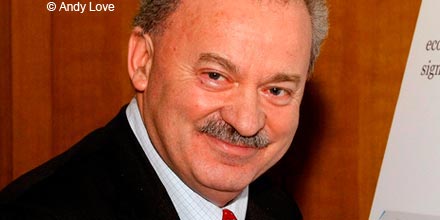
MPs have attacked the Money Advice Service (MAS), arguing it has a lack of direction and is replicating services that were already available.
During a Treasury Select Committee evidence session as part of an inquiry into the MAS, Labour MP Andy Love (pictured) said that the service was brought in to help consumers manage debt advice and it seemed instead to be replicating other services already provided.
‘I would understand as a coordinator in that sense at least a minimum bringing together some of these services and having them understand to interact with each other,' he said.
'Do they recognise that this is a complex landscape? And that MAS has been asked to coordinate?’
Labour MP George Mudie attacked the service’s lack of direction and said: ‘Does anyone at the table know what their role is?
‘They have not just arrived, they came from the body that was under the Financial Services Authority—I didn’t hear screams then— this body has been set up with this money and it seems to be they’re scrambling around to find a role at a very sensitive time.’
On the panel was chair of the Financial Services Practitioner Panel, Joe Garner, who said it was ‘absolutely appropriate’ for the financial services sector to be funding the MAS but that it should be pulling its weight.
‘I don’t think there’s an issue over the price tag, I think it’s over the value for money. If it were a business it would be more closely co-ordinated.
‘There’s a big savings gap and pensions gap in this country and between us we can’t do enough in this area and the industry thinks [the MAS] should be at least contributing its fair share.’
Adam Phillips, chair of the Financial Services Consumer Panel agreed, arguing the MAS needed to do more than simply sign-posting or replicating other websites.

No comments:
Post a Comment